
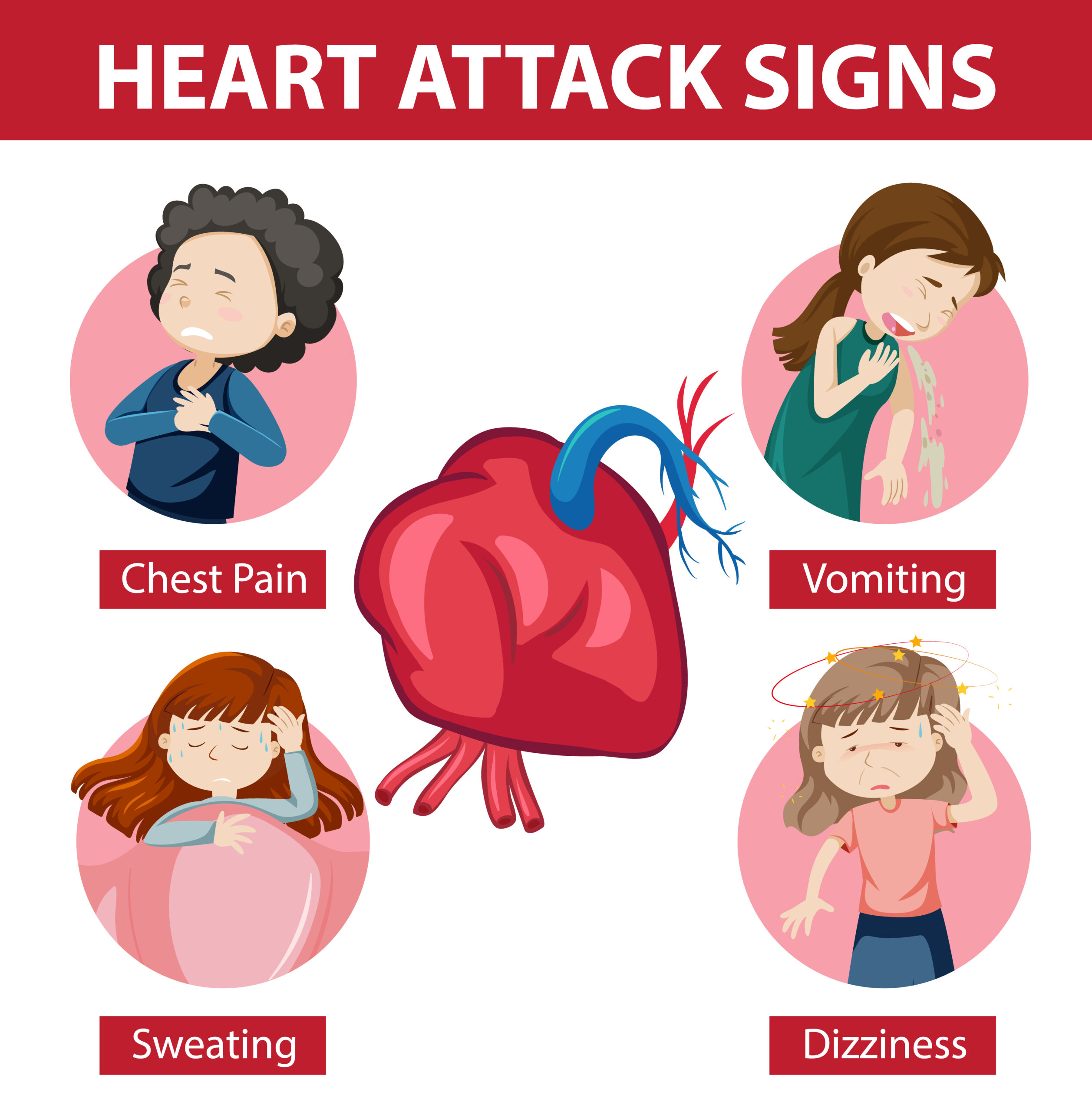
Every minute counts during a heart attack. Recognizing symptoms early can save a life—including yours.
When the heart’s blood supply is cut off, a heart attack occurs. Shortness of breath, back, jaw, and arm pain, as well as sudden sweating or nausea, are the main symptoms. Do not drive yourself if you suspect a heart attack; instead, call emergency services right away. Life is saved by early treatment.
What Is a Heart Attack?.
A myocardial infarction, also known as a heart attack, occurs when blood flow to a portion of the heart muscle is interrupted, typically by a blood clot that develops inside a constricted artery. The heart muscle begins to deteriorate if there is insufficient oxygen-rich blood. The damage may be more severe the longer the obstruction persists.
It’s crucial to remember:
Cardiac arrest is an electrical issue (the heart stops beating abruptly), whereas a heart attack is a circulation issue (blocked blood flow).
Angina vs. heart attack: Angina is characterized by decreased blood flow, which results in chest pain that typically goes away with rest or medication. A heart attack requires immediate medical attention and results in long-term harm.
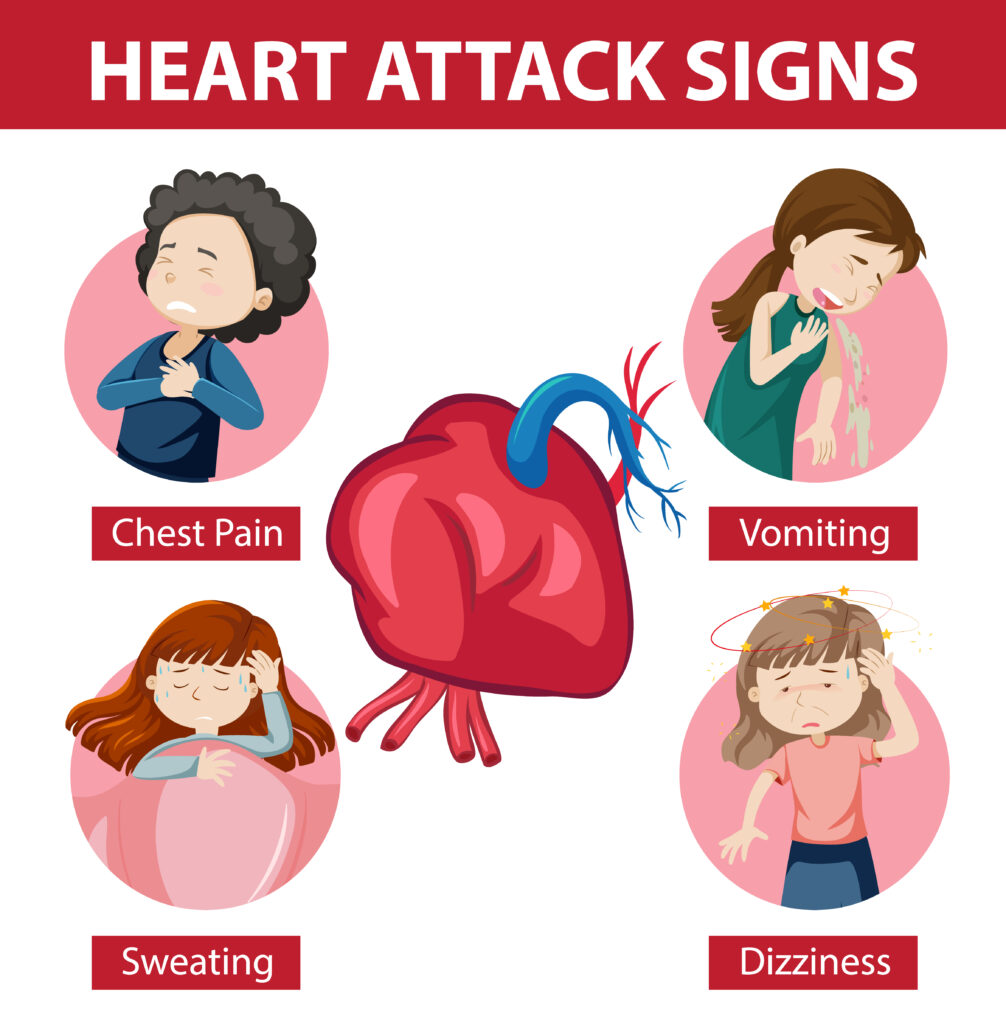
Early & Classic Symptoms
mild pressure or discomfort in the chest that may be intermittent
Days before onset of unexplained fatigue, particularly in women
Breathlessness at rest or with little effort
Pain, nausea, or acid reflux symptoms similar to indigestion
These subliminal indications frequently come before a major incident. Early medical evaluation can be prompted by noticing recurrent fatigue or gastrointestinal discomfort.
Traditional Heart Attack Signs
severe, debilitating tightness or pain in the chest, frequently compared to a “elephant sitting on the chest.”
Back, neck, shoulder, jaw, or left arm pain that radiates
Lightheadedness, sudden dizziness, or excessive perspiration (also known as “cold sweat”)
Severe dyspnea that does not go away with rest
Chest pain accompanied by nausea or vomiting
Significant coronary blockage is indicated by classic signs. Stop activity right away and contact emergency services when these happen, especially when they happen together.